Marvel Rivals hardstuck claims fall apart when a Grandmaster lobby gets spectated live
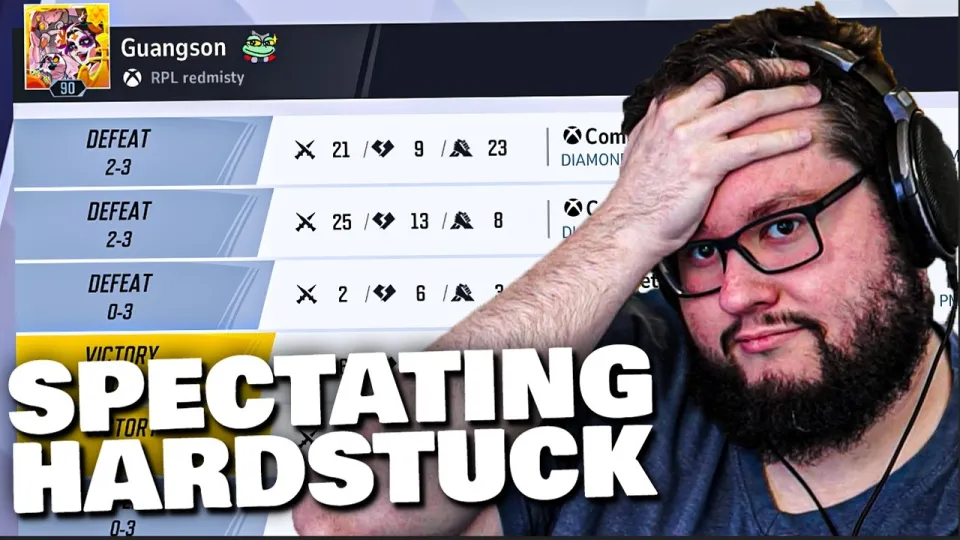
Video: I Spectated Someone Who Claimed To Be Hardstuck In Marvel Rivals
Need articles like this for your video? They help promote it on YouTube and Google — order them in the Telegram bot @sat_sit_bot. Articles with your video embedded are written and posted by the bot itself — on popular topical sites (no ads). Free trial — 50 articles.
· based on the channel Flats
Marvel Rivals players who call themselves hardstuck usually are not stuck because of teammates — they are stuck because of habits they refuse to review. In a live spectate session, streamer Flats watched a player who insisted his rank was everyone else's fault, then walked through the footage and found a Grandmaster account with a negative win rate, a Spider-Man main swapping to Cloak and Dagger, and fundamental mistakes like jogging past a health pack while hunting for one. You can watch the full breakdown live on Flats' Twitch channel, where he streams ranked reviews and coaching sessions.
What the hardstuck claim actually looked like in Marvel Rivals
The player opened with the classic framing: he plays well, his teammates hold him back, and the matchmaker has him trapped. The spectate quickly inverted that story. His rank was Grandmaster, which in Marvel Rivals sits near the top of the ladder, yet his record showed more losses than wins. That combination — high rank, losing record — is the signature of a player who has climbed on volume and rank protection rather than on consistent performance, and it is exactly the profile that produces "I'm hardstuck" complaints.
Three things stood out in the review:
- Role identity confusion. He described himself as a Spider-Man main but was on support, and the Cloak and Dagger play amounted to hiding on Dagger and rarely using the Cloak half of the kit — a running joke in the community is that some players "play Dagger, hold the Cloak."
- No accountability. Every death had an external cause: a tank that did not peel, a duelist that fed, a healer that was "throwing." None of the mistakes were his own.
- Ego outpacing mechanics. The confidence in voice chat was far ahead of what the gameplay supported, which is the single most common reason players plateau in hero shooters.
Why a negative win rate in Grandmaster is a red flag
A negative win rate at a high rank means the player is not actually beating the rank he is in. Marvel Rivals, like most team-based hero shooters, softens losses with protection mechanics and generous point gains, so a player who queues enough games can drift upward even while losing more than he wins. That produces a Grandmaster badge without Grandmaster decision-making — and it makes the "my teammates are the problem" argument collapse, because a player who genuinely outperformed his lobby would trend positive over a large sample.
The practical takeaway for anyone reviewing their own account: check win rate over the last 30 to 50 games, not the badge. If the number is under 50 percent, the rank is borrowed, and the fix is not a new duo partner.
The mistakes Flats flagged that any ranked player can fix
The review was less about flashy mechanics and more about decisions that cost games silently. The most memorable moment was the player sauntering straight past a health pack while visibly searching for healing — a small thing that signals he is not tracking the map at all. Similar issues showed up around ultimate usage: a Magneto ultimate whiffed so badly that the character's collapse animation read like disappointment, and invisibility cooldowns were burned with no follow-up plan.
A short checklist drawn from the session:
- Know where every health pack on your route sits before you need it.
- Use utility cooldowns with an exit or a kill in mind, not as a panic button.
- On Cloak and Dagger, swap forms for the tool you need — dark force walls and blinding for pressure, Dagger's heals for sustain.
- After every death, name one thing you controlled that you could have done differently.
Typical viewer questions about hardstuck players in Marvel Rivals
Viewers watching this kind of review tend to split into two camps: those who recognize the player from their own ranked games, and those worried the same critique applies to them. The recurring questions are worth answering directly.
- Is the matchmaker really rigged against some accounts? No system is perfect, but a losing record over dozens of games reflects your own impact more than the algorithm. The player in this review had a negative win rate in Grandmaster, which no matchmaker can manufacture.
- Can teammates genuinely hold you back? In individual games, yes — one disconnected or tilted player can decide a match. Over a season, no: your own decisions appear in every single game, and that is the only variable you control.
- Does switching heroes fix a plateau? Only if the switch matches a role you can actually execute. A Spider-Man main moving to support without learning the support kit just changes the shape of the same mistakes.
- Why do high-rank players make basic errors? Because rank and fundamentals are not the same thing. Volume climbing rewards persistence, not precision, and bad habits survive all the way into Grandmaster.
What a spectate review teaches that a rank badge cannot
Watching your own gameplay through someone else's eyes removes the ego filter. Flats' format works because he pauses on the exact moment a decision goes wrong — the health pack ignored, the ultimate thrown into nothing, the cooldown spent without purpose — and asks what the player was thinking. That is more instructive than any tier list, because it converts vague frustration into specific, repeatable fixes.
For Marvel Rivals players who feel stuck, the honest sequence is: record a match, watch it without commentary, count your unforced errors, and only then decide whether the problem is the team or the pilot. Most of the time the pilot wins that argument.
All the links from the video
- Live streams and ranked reviews: https://www.twitch.tv/flats
- Community Discord: https://discord.gg/flats
- Twitter/X updates: https://twitter.com/Flats_Ow
- TikTok clips: https://www.tiktok.com/@flats_ow
- Facebook page: https://www.facebook.com/FlatsTTV
Final thoughts on the Marvel Rivals hardstuck myth
The session is a clean case study in why "hardstuck" is usually a self-diagnosis error: a Grandmaster badge, a losing record, and a list of excuses that never includes the player himself. Flats, a longtime Overwatch coach and streamer who now covers Marvel Rivals ranked play, turns that mismatch into an entertaining but genuinely useful breakdown of habits anyone can audit. If you want more of these live reviews, follow the action at https://www.twitch.tv/flats and catch the next spectate before the player changes his name.
Key takeaways
- The spectated player claimed to be hardstuck in Marvel Rivals while sitting in Grandmaster rank.
- He was a Spider-Man main who switched to support and played Cloak and Dagger as "Dagger hold the Cloak."
- His account carried a negative win rate, meaning he was climbing on rank protection rather than results.
- The review showed basic errors: walking past a health pack while looking for one, and no accountability for losses.
- Flats is a former Overwatch coach and streamer who now reviews Marvel Rivals ranked gameplay on his channel.
Source: I Spectated Someone Who Claimed To Be Hardstuck In Marvel Rivals · Markdown version
Questions & answers
Can you be hardstuck in Marvel Rivals with a positive win rate?
It is possible to feel stuck while winning slightly more than you lose, because rank gains slow down as you climb and a 51 percent record moves you up very slowly. But the player in this review had a negative record in Grandmaster, which is a different problem entirely: the rank was propped up by volume and protection mechanics rather than results.
Why do so many Marvel Rivals players blame teammates instead of themselves?
Blaming teammates protects the ego and requires no change in behavior, which makes it the easiest explanation to reach for after a loss. The review shows the flaw in that logic: the same player ignored health packs, wasted cooldowns and misused his support kit, and none of those errors depended on his team at all.
What does "playing Dagger and holding the Cloak" mean?
It refers to Cloak and Dagger players who stay in Dagger form almost exclusively for healing and never swap to Cloak for the blinding, damage and escape tools. The kit is designed around switching forms for the situation, so refusing half of it leaves the team without pressure and the player without an escape.
Is it worth paying for a coaching review if I feel stuck in ranked?
A review is only useful if you accept that your own decisions are on the table; otherwise it becomes another round of blaming the matchmaker. Free alternatives work well first: record your matches, count unforced errors like missed health packs and wasted ultimates, and check your win rate over the last 30 to 50 games before spending anything.